
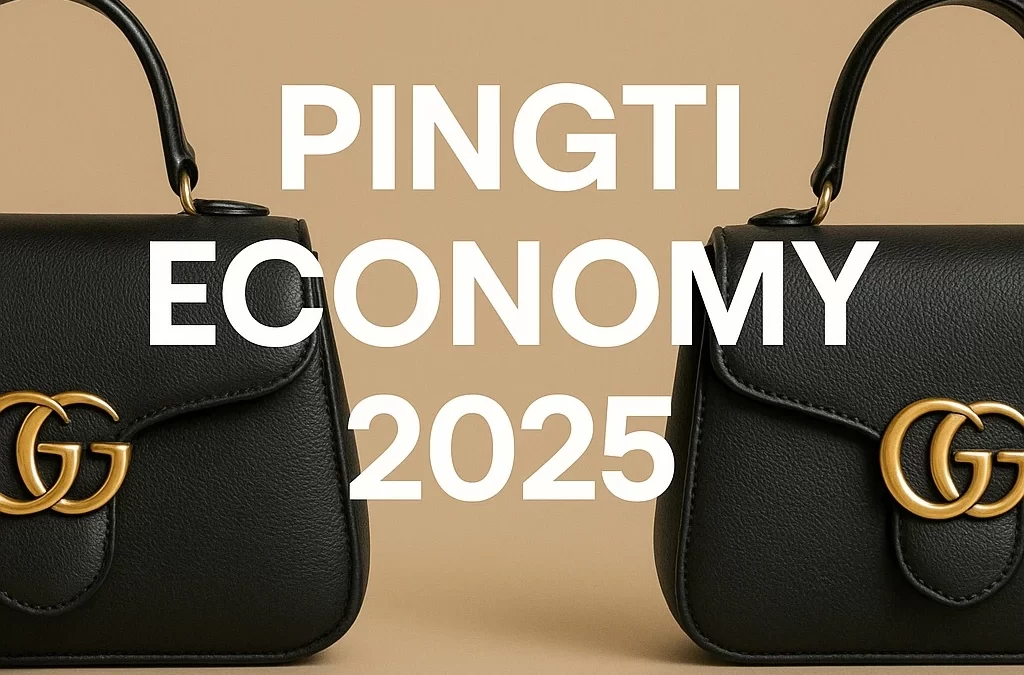
Walk into any Chinese e-commerce platform in 2025, and you’ll witness the wave of the Pingti Economy 2025, where consumers prioritize smart spending over high-end logos. “Pingti” (平替) refers to affordable alternatives or “value-for-money dupes,” but this movement goes far beyond bargain hunting.
In Tier 1 cities like Shanghai and Chengdu, the Hub of China’s consumer research reveals a major cultural shift: young, educated shoppers aren’t compromising they’re re-prioritizing. One 27-year-old said it best: “I’m not paying 800 RMB for a candle with a logo I’m buying a 60 RMB one that smells better and looks just as good on my shelf.”
Table of Contents:
- Pingti Culture: From Cosmetics to Coffee
- Emotional Spending Gets Smarter
- How Brands Must Adapt in 2025
- Conclusion: Pingti Is the New Prestige
Pingti Culture: From Cosmetics to Coffee
Pingti has gone mainstream across categories beauty, fashion, home goods, and food delivery. Local and emerging brands are offering products that look, feel, and perform like premium ones but at a fraction of the price.
On Xiaohongshu (RED), the hashtag #平替 has surpassed 2 billion views. Consumers proudly post their “dupe” finds, and livestream sales data shows that brands with pingti appeal are outperforming big-name competitors two-to-one.
Pingti Economy 2025 reflects more than thriftiness—it rewards consumers for being discerning, not just brand-driven. For many, it’s a badge of honor to find better value without the markup.
Emotional Spending Gets Smarter
One of the most interesting shifts in the Pingti Economy 2025 is the reframing of emotional spending. Our fieldwork shows people are still indulging but within limits. Small luxuries like candles, perfumes, or cute café drinks are low-risk treats that offer feel-good moments.
And there’s no shame in choosing a dupe anymore. As one participant in Guangzhou said, “It’s smart. I can buy five nice things for the price of one. That makes me feel good.”
This trend shows that emotional buying hasn’t disappearedit’s evolved. Consumers now seek joy without guilt, and Pingti products deliver just that.
How Brands Must Adapt in 2025
International brands relying solely on a premium image are at risk in the Pingti Economy 2025. Loyalty is no longer guaranteed by heritage or logo alone. Consumers are more value-sensitive than ever before.
To stay competitive, brands should consider two options:
- Create affordable capsule lines or sub-brands that speak to the pingti mindset.
- Reinforce the premium by offering innovation, sustainability, or real community-building, not just aesthetics.
Hub of China advises brands not to dismiss pingti as a passing trend. Instead, treat it as a consumer trust indicator. If your product is easily replaced by a dupe, it’s time to rethink your value proposition.
Conclusion: Pingti Is the New Prestige
In China’s 2025 marketplace, smart is the new status symbol. The Pingti Economy 2025 is not just a cost-cutting culture—it’s a new way of defining worth.
To win consumer hearts in this value-driven age, brands must offer more than an image—they must offer logic, joy, and meaning.
Don’t just sell luxury. Sell smart luxury. Otherwise, you risk being the next brand that gets swapped for a smarter, savvier alternative.